

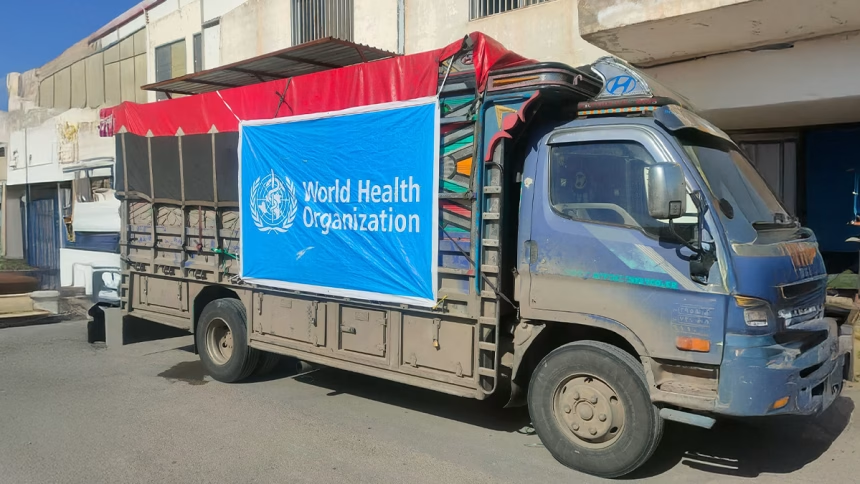

March 2026- As humanitarian health needs escalate across parts of the Middle East, the World Health Organization has released US$2 million from its Contingency Fund for Emergencies to support urgent health operations in Lebanon, Iraq and Syria.
The fund serves as a rapid financing mechanism, enabling WHO to respond quickly during crises while additional donor support is mobilized.
Lebanon will receive the largest share, with US$1 million allocated to address mounting pressure on health services caused by rising injuries, damaged infrastructure and large-scale displacement. The funding will support emergency coordination through the Public Health Emergency Operations Centre, expand trauma care, strengthen disease surveillance and ensure the supply of essential medicines and medical equipment. WHO’s response in the country is also backed by contributions from the European Union and Japan.
In Iraq, where hospitals near conflict zones and areas of unrest are experiencing increased demand, US$500,000 has been allocated. The funding will support emergency coordination, mass-casualty management, medical supplies, mental health services, community engagement and disease surveillance.
Syria will also receive US$500,000 to respond to the needs of displaced populations, including more than 104,000 people who recently crossed from Lebanon and over 116,000 internally displaced individuals in the northeast. The funds will be used to deliver essential medicines, maintain access to life-saving services and strengthen disease monitoring systems.
WHO also indicated that additional funding may be directed to Iran if support is requested in response to the ongoing conflict.
Also read: How can patients manage chronic illness during unexpected travel disruptions?
The growing crisis has intensified the need for international support. Before the current escalation, WHO had appealed for US$633 million for its 2026 health emergency operations across the Eastern Mediterranean Region. As of March, only 37 percent of the required funding has been secured.
Recent contributions from countries including Canada, Kuwait, Portugal and Estonia have helped replenish the emergency fund, following support from several nations and organizations in 2025. However, WHO warns that the Contingency Fund for Emergencies remains critically depleted due to a broader decline in humanitarian financing, limiting its ability to respond swiftly to emerging health crises.
“Escalating conflict in the Middle East is intensifying demands on health systems,” said Dr Hanan Balkhy, WHO Regional Director for the Eastern Mediterranean. “At a time when health services are already facing significant challenges, support is essential to sustain frontline health workers and maintain critical care services. WHO’s decision to release these emergency funds reflects our commitment to ensuring that lifesaving health services continue during this crisis.”