


Crohn’s disease is more than a gastrointestinal condition; it’s a lifelong, often invisible battle that disrupts routines, diets, work, and even identities. Across the Middle East, rising cases are pushing the condition out of the shadows and into clinical focus. Yet, for many patients, the road to diagnosis and treatment remains uneven, shaped by access gaps, cultural perceptions, and system-level limitations.
In this feature, we bring together voices from both the front lines of patient care and the healthcare industry to explore how Crohn’s is being managed across the region. From advancing biologic therapies and building integrated care models to improving early diagnosis and investing in real-world data, their insights offer a balanced view of the evolving IBD landscape. Together, they outline a vision of care that is not only effective, but also inclusive, continuous, and deeply patient-centered.
Addressing Structural and Diagnostic Gaps in Crohn’s Care
“Managing Crohn’s disease in the Middle East is as much about navigating systemic and structural barriers as it is about treating a complex condition,” says Dr. Ibrahim Alhosani, Consultant Gastroenterologist at Burjeel Hospital. Drawing on his regional experience and international training, Dr. Alhosani highlights the multi-layered challenges that continue to hinder early diagnosis and equitable care.
“Access to specialized care remains limited across several countries, especially in conflict-affected areas. Socioeconomic disparities and healthcare infrastructure gaps often delay diagnosis and restrict ongoing treatment,” he explains. Even when patients reach the clinic, Crohn’s presents a diagnostic puzzle. “Its symptoms can mimic other inflammatory conditions. Without advanced tools like endoscopy or cross-sectional imaging, and the clinical training to interpret them, we risk misdiagnosis.”
Dr. Alhosani also points to rising incidence rates across the region, with some countries showing familial clustering, suggesting a growing genetic predisposition. However, limited awareness, both in the general public and among primary care physicians, means that Crohn’s is still under-recognized. “We need targeted education efforts that break through cultural misconceptions and stigma, especially around bowel-related diseases, which many patients hesitate to discuss.”
From a treatment standpoint, affordability and regulatory access remain major hurdles.
Advanced therapies like biologics and immunomodulators are often cost-prohibitive. Many patients lack adequate insurance, and in some countries, these drugs are still not approved or readily available,” he says. Specialist shortages, particularly in gastroenterology, exacerbate these gaps.
Still, Dr. Alhosani is optimistic. He advocates for a regionally adapted care model, one that blends international best practices with local realities. “We need standardized diagnostic and treatment protocols aligned with global bodies like ECCO and ACG, but adapted to our healthcare systems and cultural context.”
“We need standardized diagnostic and treatment protocols aligned with global bodies but adapted to our healthcare systems and cultural context.”
– Dr. Ibrahim Alhosani, Consultant Gastroenterologist, Burjeel Hospital
He sees tremendous value in multidisciplinary, patient-centered care. “Holistic IBD clinics that bring together gastroenterologists, psychologists, dietitians, and specialist nurses have transformed care in other regions. I believe they can do the same here.” Support groups and educational campaigns in local languages are also crucial, he adds.
Reflecting on his training abroad, Dr. Alhosani concludes: “The future of Crohn’s disease care in our region lies in better awareness, better infrastructure, and stronger collaboration. We have the knowledge; we now need the systems and willpower to implement it.”
Why Lifelong Monitoring and Patient Education Matter
Dr. Filippos Georgopoulos, Consultant Gastroenterologist at Al Zahra Hospital Dubai, highlights that managing Crohn’s disease goes beyond simply addressing flare-ups. It requires anticipating them before they arise. Drawing on extensive experience in inflammatory bowel disease (IBD) care, he stresses that sustained patient education, continuous monitoring, and a collaborative, multidisciplinary approach are essential to maintaining long-term disease control and improving patient outcomes.
“Crohn’s disease can be unpredictable. A patient may appear well, yet inflammation could be progressing silently,” explains Dr. Filippos. “That’s why structured, regular follow-up between physician and patient is essential. Catching flare-ups early, even those without symptoms, helps us act before complications arise.”
One of the most pressing challenges he sees is limited insurance coverage. “Especially for self-employed patients or those with individual plans, insurance policies often exclude chronic conditions or offer minimal coverage. This forces many to pay out of pocket, leading to inconsistent care or delayed treatment.”
Treatment adherence is another key issue. “Patients tend to stop medication once they feel better, unaware that Crohn’s is a lifelong condition. Evidence shows that 80% of those who discontinue therapy relapse within two years,” he notes. Education, for both patients and families, is vital in reinforcing the need for ongoing treatment even during remission.
Dr. Filippos highlights how advanced biologics have reshaped care for difficult cases. “These therapies don’t just manage symptoms, they change the disease trajectory for many patients. They’ve been a turning point in IBD treatment.” Still, when biologics fall short or complications like strictures arise, surgery remains a valid option. “Surgery isn’t a failure, it’s a reset. For some, it’s the most effective way to break the cycle of inflammation.”
A core philosophy in his practice is proactive, personalized monitoring. “We don’t rely on symptoms alone. Lab markers, stool tests, imaging, and endoscopy give us the full picture,” he says. “This helps us track disease progression more accurately.”
At Al Zahra Hospital, Dr. Filippos works within a multidisciplinary team of IBD nurses, dietitians, radiologists, and surgeons. “This model ensures every angle of the disease is addressed. The IBD nurse plays a particularly vital role, as they often connect with patients in ways that help uncover real-life challenges.”
Beyond the clinic, he advocates for stronger community engagement. “We helped initiate the UAE’s official IBD patient society because informed, supported patients do better. Peer groups and credible resources are a powerful extension of care.”
“Crohn’s disease can be unpredictable. A patient may appear well, yet inflammation could be progressing silently.”
– Dr. Filippos Georgopoulos, Consultant Gastroenterologist, Al Zahra Hospital Dubai
Advancing IBD Care through Evidence, Innovation, and Equity
“Crohn’s disease treatment has entered a transformative era,” says Dr. Mohammed Nabil Quraishi, Consultant Gastroenterologist and Director of the IBD Service at Sheikh Shakhbout Medical City (SSMC). “We’ve moved beyond the conventional ‘step-up’ approach. For patients with moderate to severe disease, early intervention using biologics can change the disease trajectory by reducing bowel damage, hospitalizations, and surgeries.”
The UAE has rapidly embraced this paradigm shift. Through the Emirates Drug Establishment’s (EDE) Fast Track system, cutting-edge therapies often reach UAE patients soon after global approvals. Still, affordability remains a critical concern. Dr. Quraishi emphasizes that the country’s widespread adoption of biosimilars, which are lower-cost, clinically equivalent versions of original biologics, has been central to expanding access while maintaining sustainability. “Infliximab and adalimumab biosimilars have reduced treatment costs by up to 50%, without compromising efficacy,” he says.
However, he is clear that biosimilars must be introduced thoughtfully. “Biosimilars are not generics; they are similar, not identical. Switching requires careful discussion with the patient, especially if there is a history of anti-drug antibodies or prior loss of response to the originator,” he explains. The UAE’s Department of Health reflects this caution in its guidelines, which prohibit automatic substitution and reinforce the physician’s role in decision-making.
He also notes the importance of addressing the nocebo effect, where negative expectations can influence outcomes. “Even minor differences in the injection device or formulation can lead to patient-reported issues. Education and open dialogue are key,” Dr. Quraishi says.
“With innovation, real-world data, and patient-centered care, the UAE is redefining Crohn’s disease management.”
– Dr. Mohammed Nabil Quraishi, Consultant Gastroenterologist, SSMC
Looking ahead, he highlights the promise of precision medicine, AI-assisted endoscopy, and novel therapies targeting pathways like TL1A. But he also urges more local research. “Patients in the Middle East are underrepresented in global trials. We need real-world data and regional registries to guide reimbursement and tailor care to our population.”
For Dr. Quraishi, the path forward is clear: “With a blend of innovation, evidence, and patient-centered care, the UAE is redefining how Crohn’s disease is managed regionally and globally.”
[The following points have been extracted from the article ‘Therapeutic Advancements in Crohn’s Disease’ published on MedEdgeMEA.com, to reflect diverse perspectives on biosimilars]
A Pharma Perspective on Affordability, Education, and Holistic Support
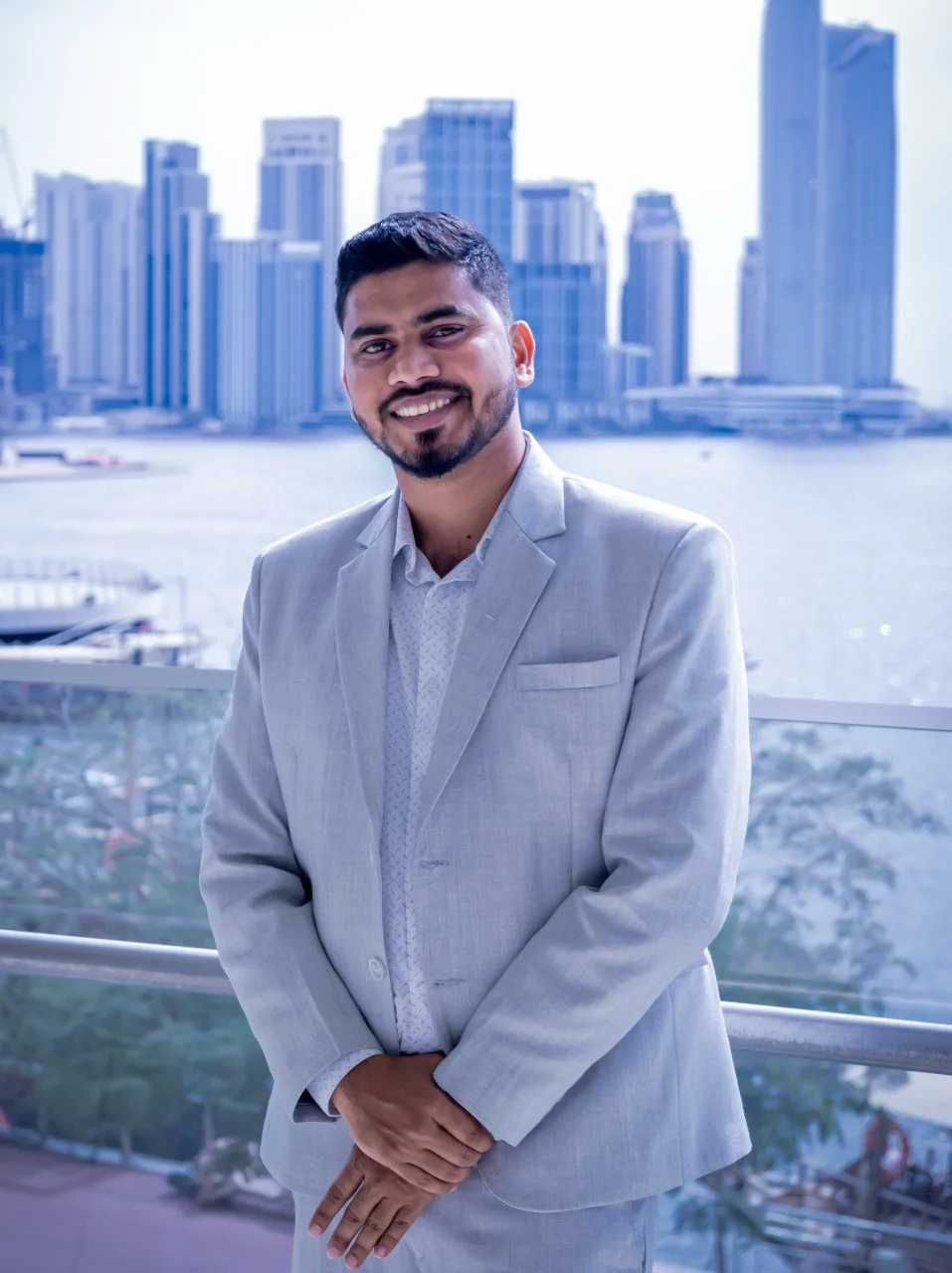
For Ronak Tibrewala, Managing Director of Ashro Group of Companies, a leading regional pharmaceutical firm, the gaps in inflammatory bowel disease (IBD) care go far beyond medication. “The biggest unmet needs in IBD today stem from both clinical and systemic challenges,” he explains. “We still lack reliable biomarkers to predict disease progression or treatment response. This means that physicians are often left making best guesses, and relapses continue to be a major concern.”
Ronak emphasizes that diagnostic delays, sometimes stretching over months or even years, remain a major hurdle, especially in patients with mild or atypical symptoms. “We also see a lack of integrated care models. IBD patients often suffer not just from gastrointestinal issues but also from fatigue, chronic pain, and psychological distress. Yet, these are rarely addressed holistically.”
From his vantage point, affordability and access are key to transforming outcomes. “The high cost of advanced biologics limits access for many patients across the region,” he says. “That’s why biosimilars are such a critical solution. They make proven therapies available to more people at a fraction of the cost.” Drawing on an example from oncology, he notes, “Trastuzumab, originally launched as Herceptin in 1998, was once out of reach for most. With the introduction of biosimilars, it is now a first-line treatment in many breast cancer cases worldwide. The same can be true for IBD with the introduction of Ustekinumab.”
“The biggest unmet needs in IBD stem from both clinical and systemic challenges; we still lack reliable biomarkers to predict disease progression.”
– Ronak Tibrewala, Managing Director of Ashro Group of Companies
Ronak believes pharmaceutical companies have a broader role to play beyond just delivering products. “Supporting physicians in managing chronic diseases is part of Ashro’s DNA,” he shares. “One of our proudest initiatives was in Myanmar, where we supported HIV/AIDS treatment by offering a wide range of formulations and tracking tools to ensure dose compliance.”
Ashro’s approach included unconventional but deeply practical steps: “We introduced a program where patients could take their medication now and pay later if needed. If a patient unfortunately passed away, we responsibly repurchased and destroyed the unused medication. We also renovated hospitals, donated equipment, hosted clinical seminars, and even published treatment SOPs that were adopted internationally.”
In terms of physician support, Ronak says Ashro Drug Store LLC has consistently prioritized real-world collaboration. “We participate in medical events and CMEs, provide free educational books to doctors, and offer updated treatment guidelines. More importantly we feel it is important to share a doctor’s clinical knowledge and observations to the wider medical community to improve overall outcome and we have supported this in the past by publishing an entire medical textbook with the help of the medical community that highlighted effective treatment and management of the cases. In the same spirit we’ve also introduced IBD management kits and lifestyle support tools to help patients stay on track.”
He stresses the importance of awareness and education in disease outcomes. “Medication is just one part of the solution. For effective care, both practitioners and patients need to recognize what they’re dealing with. Is it IBD or something else? The sooner we identify it, the better the outcomes. That’s where education plays a transformative role.”
Ultimately, Ashro’s mission, Ronak says, is clear: “To build stronger partnerships with the medical community and help more patients benefit from early diagnosis, appropriate therapy, and holistic support. If we focus only on the pill, we miss the person. And that’s something we have always kept as the first priority.”