


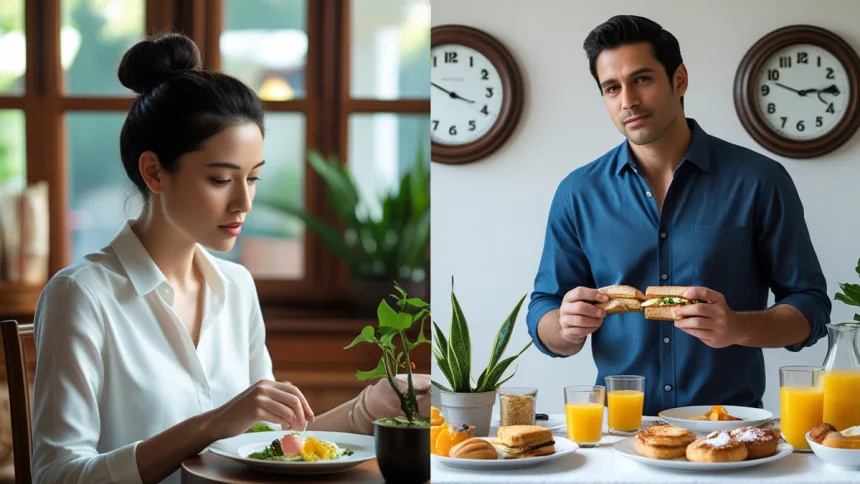
Have you ever wondered if it’s better to sit or stand while eating? It’s something most of us don’t think twice about, but your posture during meals can make a difference to your digestion, appetite, and even how much you enjoy your food. While sitting is the traditional way to eat, many of us find ourselves standing and snacking on busy days. So, what’s the verdict? Should you sit or stand while eating? Let’s break it down.
Digestion and how your body handles food
One of the first things eating posture affects is digestion. If you’re standing while eating, food moves through your stomach to the intestines a bit faster. This might help if you feel bloated or have issues like a slow stomach (gastroparesis).
But faster digestion isn’t always better. When food moves through your system quickly, your brain might not have enough time to register that you’re full. This could lead to overeating later. Sitting, on the other hand, gives your stomach more time to do its job and lets your brain catch up, helping you feel satisfied with what you’ve eaten.
Does standing make you eat less?
Posture doesn’t just affect digestion, it can also influence how much you eat. Studies show that when you stand while eating, you may not taste your food as well. Standing often means multitasking, like eating while scrolling your phone or rushing to your next meeting, which can take your focus away from the flavours of your meal.
Interestingly, standing might make you eat less. Since the flavours don’t stand out as much, you could stop eating sooner. This might sound great if you’re watching your portions, but it’s not always a win. If you don’t feel satisfied, you could find yourself grazing or snacking more later. Sitting helps you focus on your meal, enjoy it more, and recognize when you’re full.
Slowing down with mindful eating
Eating while standing is often a rushed experience. Think about grabbing a sandwich at a counter or eating a snack while running errands, you’re probably not savouring every bite. This kind of hurried eating can lead to stress, which isn’t great for digestion or your overall experience with food.
Also Read : Is Drinking Water During Meals Good or Bad for Digestion?
When you sit down for a meal, you’re more likely to slow down. Sitting encourages mindful eating, which means paying attention to your food, enjoying the flavors, and listening to your body’s cues. It’s a simple way to make meals more enjoyable and even healthier.
Acid reflux or heartburn
If you deal with acid reflux or heartburn, you know how important posture can be. Standing while eating might help because it keeps your stomach in an upright position, making it harder for acid to come back up into your esophagus.
You might not think about it, but how you eat can even affect how well your body absorbs nutrients.
Dr. Varshini Tamil Selvan
With, good posture while sitting can offer the same benefits. The key is to avoid slouching. If you’re sitting hunched over, you’re compressing your stomach, which can make heartburn worse. So, whether you’re standing or sitting, keeping your back straight is a good habit to adopt.
Posture and nutrient absorption
You might not think about it, but how you eat can even affect how well your body absorbs nutrients. Standing and eating in a rush often means chewing less, which can make it harder for your digestive system to break down food properly.
When you sit, you’re more likely to eat at a slower pace and chew thoroughly. Chewing is an important first step in digestion—it gives enzymes in your saliva time to start breaking down food so your body can absorb nutrients more effectively. Sitting also improves blood flow to your digestive system, whereas standing for long periods might direct blood flow more toward your legs and feet.
Social and emotional side of eating
Eating isn’t just about fueling your body, it’s also a social and cultural experience. Sitting down for a meal with family or friends has always been a way to connect and bond. Whether it’s a traditional family dinner or a casual lunch with coworkers, sitting helps create a sense of togetherness.
Standing meals, on the other hand, often feel rushed and less enjoyable. They’re great for quick bites or busy days, but they can lack the emotional and social benefits of sitting down to eat. If you’re standing and eating alone in a crowded place, for instance, the experience might feel less satisfying compared to sitting at a table and enjoying your meal in a more relaxed setting.
Practical factors to consider
Sometimes, posture isn’t about choice, it’s about practicality. For older adults or those with certain health issues, standing while eating can be tiring or even risky. Sitting offers stability and comfort, making it the better option.
On the flip side, standing while eating can be a necessity for people with busy schedules. Healthcare workers, retail employees, and others in fast-paced environments often rely on standing meals.
Finding the balance
So, what’s the takeaway? Should you sit or stand while eating? It depends on your situation. If you’re prone to heartburn or feel bloated after meals, standing might help. But if you want to enjoy your food, eat mindfully, and connect with others, sitting is the better choice.
Ultimately, it’s not just about posture. Slowing down, chewing your food well, and avoiding distractions are just as important. Whether you’re sitting or standing, these habits will make your meals healthier and more enjoyable. The next time you enjoy a meal, take a moment to consider how you’re eating. Both your body and your taste buds will appreciate it.