


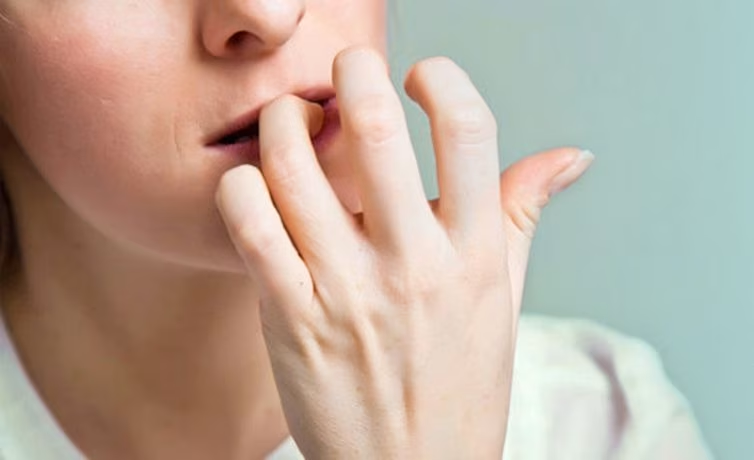

Remember those childhood days when our parents would catch us biting our nails and immediately warn us, “keep doing that and a tree will grow in your stomach”? A rather funny warning right? While we eventually outgrew the fear of growing a tree inside our stomachs, many of us never quite outgrew the habit itself.
But have you ever wondered what actually happens to your body when you bite your nails?
Nail biting, medically known as onychophagia, is a repetative behaviour that affects both children and adults. Some people bite nails our of boredom or concentration, others do it when they are stressed, anxious, or nervous. For some people biting their nails provide temporary relief from tension, while others do it unconsciously when concentrating, studying, or watching television.
Nail-biting often begins during childhood and may continue into adulthood if the behaviour becomes deeply ingrained. In many cases, it follows a cycle: a person experiences tension or notices an uneven nail, begins biting, feels temporary relief, and gradually repeats the behaviour. While occasional nail-biting may not cause serious harm, frequent or severe biting can damage the nails and surrounding skin, increase the risk of infections, and affect dental health.
Click here to join our WhatsApp channel here
So let’s take a closer look at what really happens when we bite our nails.
What Happens When You Bite Your Nails?
•Damage to the nails and surrounding skin.
•Bacterial infections around the nail.
•Transfer of germs from the fingers to the mouth.
•Potential damage to teeth and gums.
•Jaw discomfort in frequent nail-biters
What causes Nail-Biting?
Nail-biting often begins during childhood, typically between the ages of 3 and 6, and may continue into adolescence or adulthood. While some children develop the habit out of curiosity or imitation, others may bite their nails in response to stress, anxiety, boredom, or frustration. As the behaviour is repeated, it can become an automatic response, especially during moments of concentration or emotional tension. Although nail-biting can sometimes be associated with mental health conditions, the habit alone does not indicate a psychological disorder.
Also read: Abu Dhabi Revokes Doctor’s Licence and Suspends Another Over Medication Violations
When Does Nail-Biting Become a Health Concern?
Nail-biting becomes a health concern when it starts causing visible damage or discomfort. Repeated biting can lead to:
Nail damage: Weak, broken, or deformed nails.
Skin infections: Redness, swelling, pain, or pus around the fingertips.
Oral health problems: Injuries to the gums and damage to the teeth.
Difficulty stopping: Persistent biting that causes distress or continues despite repeated attempts to quit.
When these signs appear, seeking medical advice can help prevent further complications.
How Can You Break the Habit?
Keep nails trimmed: Short, smooth nails leave less to bite.
Identify your triggers: Notice whether stress, boredom, or concentration makes you bite your nails.
Use bitter-tasting nail coatings: These can discourage nail-biting.
Keep your hands occupied: Use a stress ball, pen, or fidget toy when the urge arises.
Manage stress: Try deep breathing, relaxation techniques, or other healthy coping strategies.
Seek professional help: If the habit is difficult to control, habit-reversal training or behavioural therapy may help.
Nail-biting may seem like a harmless childhood habit, but its effects can extend beyond damaged nails. From increasing the risk of infections to affecting dental health, repeated nail-biting is a behaviour that deserves attention. Rather than dismissing it as a simple bad habit, understanding its triggers and taking small steps to control it can help prevent potential complications. After all, sometimes the smallest habits can have a bigger impact on our health than we realise.