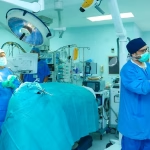


Professor Muhammad Saad Zaghloul, a leading figure in oncology and Head of Radiation Oncology at the Children Cancer Hospital Egypt (CCHE), at the Seven Emirates Pediatrics Hematology and Oncology Conference in Abu Dhabi. Professor Zaghloul has been instrumental in establishing the first proton beam therapy facility in Africa and the Middle East a true breakthrough in cancer care for children.
Click here to join our WhatsApp channel here
The Value of Proton Beam Therapy in Pediatrics
Professor Zaghloul emphasized the immense benefit of proton beam therapy for all pediatric cancers. The primary advantage lies in the therapy’s precision, which significantly reduces side effects, especially late effects like secondary malignancies.
- Precision and Protection: Unlike traditional radiation, proton beams deliver a “prompt and precise” dose, ensuring the normal surrounding tissues receive minimal to zero radiation.
- Reduced Late Effects: This protection is vital for children, whose developing bodies are highly susceptible to long-term side effects.
- Targeting Resistant Tumors: The precision allows doctors to safely increase the radiation dose to highly resistant tumors, such as those at the base of the skull, without harming nearby critical structures like the brain.
A New Era for Low- and Middle-Income Countries
The Professor provided an exciting update on the global expansion of this technology:
- Global Expansion: The number of proton beam facilities globally has rapidly increased from about 50 in 2017 to 140 today.
- Access in Developing Nations: Egypt’s facility will be only the fifth in the world among low- and middle-income countries (following China, Russia, India, and Thailand) to offer this cutting-edge treatment.
- The Egyptian Milestone: The first proton beam therapy facility in Egypt, at the Children Cancer Hospital Egypt (CCHE), is currently in the final stages of installation and is expected to start treating patients in November 2025.
- Future Hope: While the financial cost remains high, it has decreased dramatically, which, combined with the required technical background and infrastructure, provides hope for further expansion of this vital technology across Africa and the Middle East.