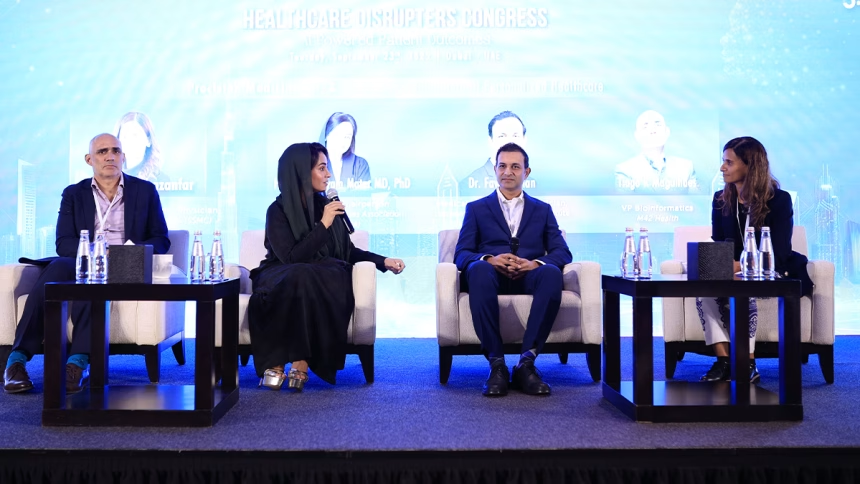
Dubai hosted the 8th edition of the Healthcare Disrupters Congress today, where one of the key panel sessions focused on how precision medicine, artificial intelligence (AI), and genomics are reshaping the future of healthcare. The discussion explored the shift from traditional population-based screening to individualized prevention and treatment strategies designed to improve outcomes and reduce unnecessary interventions.
Also Read: 8th Healthcare Disrupters Congress: Pioneering the Future of Patient Outcomes with AI in Dubai, UAE
The panel was moderated by Dr. Rahat Ghazanfar, Clinical Director and Longevity Physician at Sheikh Shakhbout Medical City (SSMC). Panelists included H.E. Dr. Maryam Matar, Founder & Chairperson of the UAE Genetic Diseases Association (UAEGDA); Dr. Fawad Khan, Medical Director and Staff Physician in Longevity Medicine at Cleveland Clinic Abu Dhabi; and Tiago R. Magalhães, Vice President of Bioinformatics at M42 Health.
Redefining cancer prevention
Dr. Fawad Khan highlighted how his team is moving away from one-size-fits-all population screening to identifying high-risk groups using personal history, family history, and genomic data. “Risk stratification allows us to personalize prevention,” he explained, noting that individuals who test positive for high-risk genetic variants, such as BRCA2, can begin earlier screening, consider lifestyle changes, and explore risk-reducing strategies, while those testing negative can follow standard population-based screening.
Click here to join our WhatsApp channel here
He emphasized that further refinement is underway through polygenic risk scores (PRS), which help predict risk even for those without known pathogenic variants but with compelling family histories.
Patient acceptance and awareness
Addressing concerns about patient compliance with intensive prevention programs, Dr. Khan reported high engagement over the past two years. He credited strong public awareness campaigns and initiatives such as the Emirati Genome Program, which connects identified patients to clinical care and prevention pathways.
Local data for local solutions
Tiago Magalhães stressed the importance of training AI on regional data to ensure accuracy and relevance. “The Emirati Genome Program gives us the chance to connect genetics with real-world health data, identify local variants, and understand their true impact,” he said. He confirmed that the government plans to create a trusted research environment (TRE) that will allow approved researchers to analyze anonymized genomic data while ensuring privacy.
Making precision medicine accessible
H.E. Dr. Maryam Matar shared her experience in engaging insurers to make precision medicine accessible. “Within 13 months, we convinced three insurers to cover children with thalassemia regardless of nationality,” she said. She emphasized the importance of approaching insurers with data-driven cases rather than emotional appeals, showing how prevention and early intervention can save costs.
She also advised clinicians to request genetic tests that include epigenetic markers, ensuring that tests are up-to-date and informative. “If the lab does not provide the epigenetic marker, cancel the test and find another provider,” she said. Additionally, she recommended choosing cost-effective testing panels rather than full genome mapping to make a stronger case for insurance coverage. Dr. Matar highlighted that small, measurable steps and presenting tangible numbers were key to obtaining policy changes and support at the national level.
Future of personalized healthcare
Looking ahead, both Dr. Khan and Magalhães envisioned a future where genomic data, PRS, electronic health records, and AI-driven risk models are fully integrated. “At the very first consultation, I want to have all the data processed so I can focus on guiding the patient into a precision prevention program,” Dr. Khan said.
The panel concluded that with the UAE’s advanced infrastructure, government support, and growing genomic initiatives, the country is already a global leader in precision medicine.