
• Duphat
  • infinia camp
mededge mea logo web MedEdge_Logo_Dark

Public Relations, Top Health Magazine and Healthcare News GCC

  • Newsletters
  • Magazines
  • Subscribe
  • Home
  • News
  • Opinion
  • Interviews
  • Featured
  • Cover Stories
  • Events
  • Health For all
    • Ageing Gracefully
    • Family Health Matters
    • Environment Health
    • Women and Child Health
    • Men’s Health
  • Resource Hub
    • Fresh Perspectives
    • Medical Tourism
    • Medical Education
    • Personnel
    • Research
      • Healthcare Journals & Publishers
    • Healthcare Campaigns
    • Health Tools Hub
    • Dubai Health Centers Directory | Services, Locations & Timings
    • ME Explained
Reading: Can We Stop Pancreatic Cancer Before It Starts? New 3D Technique Offers Hope
Share
Notification
  • Duphat
  • infinia camp
mededge mea logo web
  • Magazines
  • Newsletters
  • Profiles
  • Subscribe
Search
  • Home
  • News
  • Opinion
  • Interviews
  • Featured
  • Cover Stories
  • Events
  • Health For all
    • Ageing Gracefully
    • Family Health Matters
    • Environment Health
    • Women and Child Health
    • Men’s Health
  • Resource Hub
    • Fresh Perspectives
    • Medical Tourism
    • Medical Education
    • Personnel
    • Research
    • Healthcare Campaigns
    • Health Tools Hub
    • Dubai Health Centers Directory | Services, Locations & Timings
    • ME Explained
Have an existing account? Sign In
MedEdge MEA > Health For All > Can We Stop Pancreatic Cancer Before It Starts? New 3D Technique Offers Hope
Health For AllLeadNews

Can We Stop Pancreatic Cancer Before It Starts? New 3D Technique Offers Hope

ME Desk
ME Desk
Published: June 21, 2024
Share
4 Min Read
Can We Stop Pancreatic Cancer Before It Starts? New 3D Technique Offers Hope
SHARE

18 June 2024- Researchers at the Johns Hopkins Kimmel Cancer Centerโ€™s Sol Goldman Pancreatic Cancer Research Center have developed a 3D genomic profiling technique to identify small precancerous lesions in the pancreas โ€” called pancreatic intraepithelial neoplasias (PanINs) โ€” that lead to one of the most aggressive, deadly pancreatic cancers.

Contents
  • โ€œNot many people actually develop pancreatic cancer, so we were shocked to find a lot of precancer, or PanINs, within the normal regions of the pancreas,โ€ says Laura Wood, M.D., Ph.D., associate professor of pathology and oncology at the Kimmel Cancer Center and the Johns Hopkins University School of Medicine and one of the studyโ€™s senior authors. โ€œThis research highlights what we donโ€™t yet know about normal aging and raises fundamental questions about how cancer arises in the human pancreas.โ€
  • The finding that multiple precancerous lesions arose from independent mutations is something that hasnโ€™t yet been seen in other organs, says Wood, โ€œbut now that we know that PanINs are there, we can work on targeting them, such as through KRAS.โ€

Published May 1 in Nature, the results provide the most detailed 3D map of precancerous lesions in the human pancreas to date, laying a foundation for future early detection of pancreatic ductal adenocarcinoma (PDAC) and other types of pancreatic cancer.

โ€œNot many people actually develop pancreatic cancer, so we were shocked to find a lot of precancer, or PanINs, within the normal regions of the pancreas,โ€ says Laura Wood, M.D., Ph.D., associate professor of pathology and oncology at the Kimmel Cancer Center and the Johns Hopkins University School of Medicine and one of the studyโ€™s senior authors. โ€œThis research highlights what we donโ€™t yet know about normal aging and raises fundamental questions about how cancer arises in the human pancreas.โ€

The research was co-led by Alicia Braxton, D.V.M., Ph.D., a postdoctoral fellow at the Johns Hopkins University School of Medicine, and Ashley Kiemen, Ph.D., an assistant professor of pathology at the medical school.

Because of their small size, PanINs are challenging to detect and cannot be identified by a typical radiology examination. In the clinic, this often means that by the time patients are diagnosed with cancer, such as PDAC, the cancer already has reached an advanced stage and metastasized to other organs.

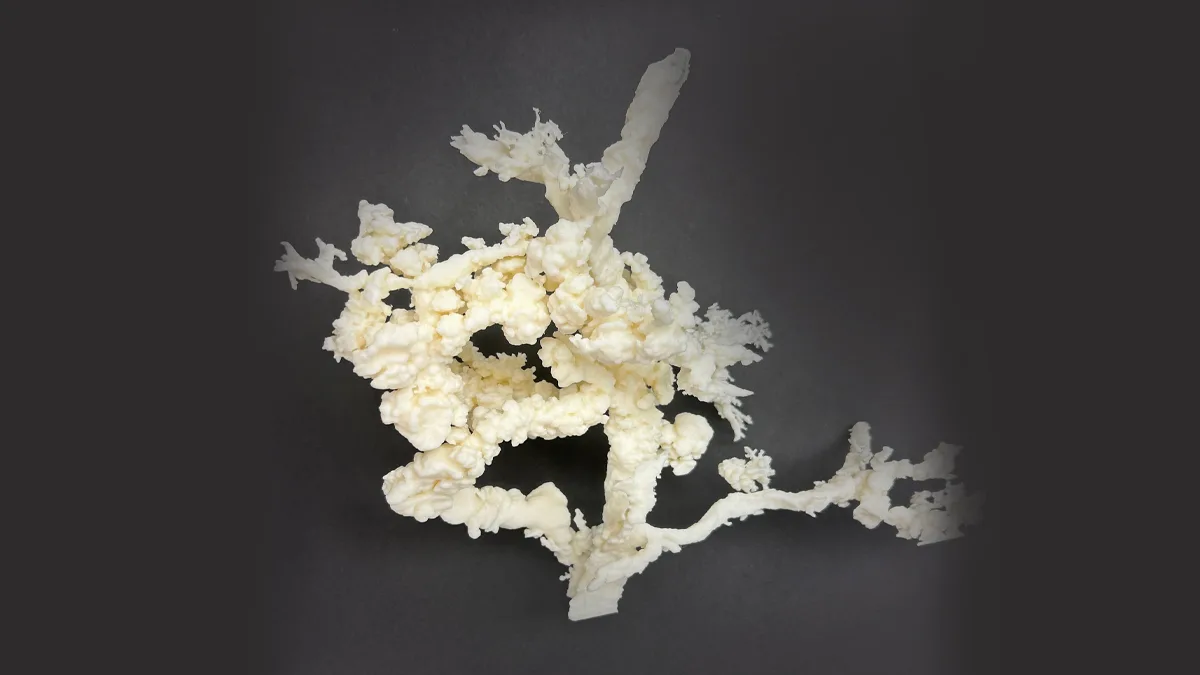
Existing 2D histological staining methods, during which tissue is thinly sliced, stained and examined under a microscope, provide only a limited view of PanINs, leaving researchers in the dark about their origins and how they lead to cancer. To better characterize PanINs, the researchers developed a 3D approach.

After thinly slicing and staining tissue from 38 normal pancreatic samples onto hundreds of sequential 2D slides, the researchers developed CODA, a machine-learning pipeline, to analyze and reconstruct the slide images into digital 3D images.

The 3D reconstructions revealed complex networks of interconnected PanINs with an average overall burden of 13 PanINs per cubic centimeter, and a range of from 1 to 31 PanINs per cubic centimeter. Patients with PDAC in other regions of their pancreas seemed to have a higher PanIN burden than those with nonductal disease, although it was not statistically significant.

Also Read: Bridging the cancer care gap: A real-world example of advancing multiple myeloma treatment

The researchers further investigated eight of the samples via 3D-guided microdissection and DNA sequencing of specific PanINs. Genomic analysis revealed that the networks were made up of genetically distinct PanINs driven by different gene mutations, such as mutations in the cancer-causing gene Kirsten rat sarcoma virus (KRAS), which is found in most pancreatic cancers.

The finding that multiple precancerous lesions arose from independent mutations is something that hasnโ€™t yet been seen in other organs, says Wood, โ€œbut now that we know that PanINs are there, we can work on targeting them, such as through KRAS.โ€

Although CODA is not yet usable in a diagnostic setting, among its advantages is that it can be applied to any tissue, disease or model organism, says Kiemen.


Share This Article
Facebook Whatsapp Whatsapp LinkedIn Copy Link
Share
Previous Article Air Pollution Kills! 8.1 Million Died Globally in 2021 Air Pollution Kills! 8.1 Million Died Globally in 2021
Next Article Summer Essential Travel Tips Summer Essential Travel Tips: Pre-Travel Medications and Precautions

Recent Posts

  • From market access to national ambition, gulf healthcare is playing a longer game
  • New Push for HIV Innovation and Access Aims to Accelerate Progress Toward 2030 Goals
  • WHO Discusses Digital Health and Humanization of Care at Scientific Conference
  • Rising Ebola Cases Deepen Humanitarian Crisis for Children in DR Congo
  • Burjeel holdings secures dual credit ratings and launches USD 1.5 billion sukuk programme
  • duphat
  • MedEdge-Infinia
Two Point Five Logo white
  • About Us
  • Contact Us
  • Medical Disclaimer
  • Privacy Policy
  • Terms and Conditions
  • Cookie Policy (EU)
  • Submit Your Story
  • MediaKit
Reading: Can We Stop Pancreatic Cancer Before It Starts? New 3D Technique Offers Hope
Share

Published by Two Point Five Media FZCO

  • About Us
  • Contact Us
  • Medical Disclaimer
  • Privacy Policy
  • Terms and Conditions
  • Cookie Policy (EU)
  • Submit Your Story
  • MediaKit
Reading: Can We Stop Pancreatic Cancer Before It Starts? New 3D Technique Offers Hope
Share

Follow US on Social Media

Facebook Instagram Linkedin X-twitter Youtube Whatsapp
Manage Consent
To provide the best experiences, we use technologies like cookies to store and/or access device information. Consenting to these technologies will allow us to process data such as browsing behavior or unique IDs on this site. Not consenting or withdrawing consent, may adversely affect certain features and functions.
Functional Always active
The technical storage or access is strictly necessary for the legitimate purpose of enabling the use of a specific service explicitly requested by the subscriber or user, or for the sole purpose of carrying out the transmission of a communication over an electronic communications network.
Preferences
The technical storage or access is necessary for the legitimate purpose of storing preferences that are not requested by the subscriber or user.
Statistics
The technical storage or access that is used exclusively for statistical purposes. The technical storage or access that is used exclusively for anonymous statistical purposes. Without a subpoena, voluntary compliance on the part of your Internet Service Provider, or additional records from a third party, information stored or retrieved for this purpose alone cannot usually be used to identify you.
Marketing
The technical storage or access is required to create user profiles to send advertising, or to track the user on a website or across several websites for similar marketing purposes.
  • Manage options
  • Manage services
  • Manage {vendor_count} vendors
  • Read more about these purposes
View preferences
  • {title}
  • {title}
  • {title}

WhatsApp us

Logo of Medede mea
Welcome Back!

Sign in to your account

Username or Email Address
Password

Lost your password?