


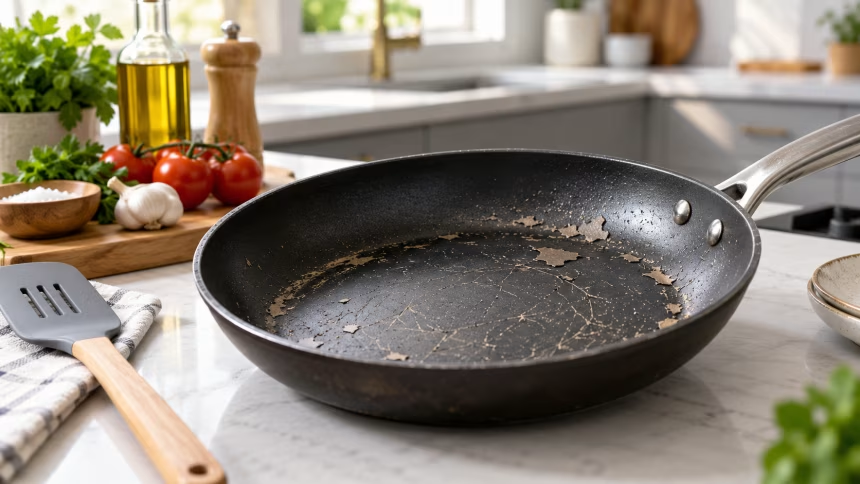
Imagine preparing your family’s favourite meal in a pan you’ve used almost every day for years. It’s convenient, requires little oil, and makes cleaning up effortless. But lately, its coating has started to chip away. Would you throw it out, or would you continue using it until it becomes completely unusable?
For many households, the answer may be the latter. Yet, the question of whether damaged non-stick cookware poses a health risk deserves closer attention.
Non-stick cookware has become a staple in modern kitchens, valued for its convenience, easy cleaning, and ability to cook food with less oil. From frying eggs in the morning to preparing dinner after a long day, these pans have made everyday cooking simpler for millions of households.
However, like any kitchen utensil, non-stick cookware does not last forever. With repeated use, exposure to heat, and regular washing, its surface may develop scratches, lose its smooth finish, or begin to peel. While these changes might seem like ordinary signs of wear and tear, they raise an important question: when does a worn-out pan become a cause for concern
What makes a cookware non-stick?
Most non-stick pans have a coating called polytetrafluoroethylene (PTFE), commonly known as Teflon. This coating prevents food from sticking to the surface, making cooking and cleaning easier.
PTFE belongs to a large group of chemicals called PFAS, often known as “forever chemicals” because many of them remain in the environment for a long time. However, not all PFAS have the same health effects. Another chemical, PFOA, was previously used in manufacturing some non-stick coatings and has been linked to health concerns.
What happens when the coating starts to peel?
When a non-stick pan begins to peel, tiny pieces of its coating may come off and mix with food. This raises an important question: could swallowing these particles harm our health?
According to the German Federal Institute for Risk Assessment (BfR), accidentally swallowing small particles of PTFE coating is not expected to cause adverse health effects. PTFE is relatively unreactive inside the body, and these particles are expected to pass through the digestive system.
However, this does not mean damaged cookware should be used indefinitely. Peeling and flaking indicate that the pan’s surface is deteriorating. Replacing a pan with a visibly damaged coating is a sensible precaution.
Is overheating a bigger concern?
Overheating is another concern with non-stick cookware. When a PTFE-coated pan reaches very high temperatures, its coating can release harmful fumes that may cause polymer fume fever, with symptoms such as fever, chills, headache, and muscle aches. Birds are particularly sensitive to these fumes, which can be fatal to them.
To reduce the risk, avoid leaving an empty non-stick pan on a hot burner, as it can heat up rapidly. Use low to medium heat for everyday cooking, ensure proper kitchen ventilation, and follow the manufacturer’s temperature guidelines. These simple precautions can help prevent overheating and reduce exposure to potentially harmful fumes.
Are forever chemicals dangerous?
Certain PFAS have been linked to health problems, including high cholesterol, immune system effects, and some cancers. However, the risks depend on the specific chemical and level of exposure.
These findings do not mean that normal use of PTFE-coated cookware causes disease. Such cookware is generally considered safe when used correctly, but overheating should be avoided.
Click here to join our WhatsApp channel here
When should you replace your pan?
Non-stick cookware does not last forever. Its lifespan depends on how often it is used, how it is cleaned, and how well it is maintained.
Here are some signs that it may be time for a replacement:
- Peeling or flaking: If pieces of the coating are coming off.
- Deep scratches: Extensive damage can affect the condition of the cooking surface.
- Visible deterioration: If the coating has become rough, uneven, or heavily worn.
How can you use non-stick cookware safely?
• Avoid heating an empty pan over high heat.
• Use low to medium heat for everyday cooking.
•Use wooden or suitable silicone utensils to prevent scratches.
• Clean the pan with a soft sponge instead of abrasive scrubbers.
• Follow the manufacturer’s instructions for cooking and cleaning.
• Replace cookware when its coating becomes visibly damaged.
If you prefer alternatives, stainless steel and cast iron are worth considering. Ceramic-coated cookware is another option, although its durability varies depending on the product.
Also read: AI-Powered Platform to Transform Healthcare Revenue Cycle Management
Stick cookware is convenient, but like any kitchen utensil, it requires proper care. A peeling coating does not automatically mean that the food cooked in the pan is dangerous. However, visible damage is a good reason to replace the cookware, while overheating should be avoided because it can release harmful fumes.
Non-stick cookware doesn’t necessarily have to be a cause for concern, but knowing its limitations is important. Paying attention to signs of damage, avoiding excessive heat, and replacing worn-out pans can go a long way in making everyday cooking safer. After all, a little awareness in the kitchen can make a meaningful difference to our health.


