


The World Health Organization (WHO) and its partners have launched a new global roadmap to address hypertensive disorders of pregnancy, including pre-eclampsia and eclampsia, which remain major causes of maternal and newborn deaths worldwide.
Hypertensive disorders affect an estimated 10–15% of pregnancies globally and are responsible for around 16% of maternal deaths, contributing to approximately 42,000 maternal deaths each year. They are also linked to more than 500,000 stillbirths and newborn deaths.
The roadmap, covering 2026 to 2035 and beyond, outlines coordinated action across research and innovation, clinical guidance, access to medicines and diagnostics, implementation, advocacy and accountability.
Click here to join our WhatsApp channel here
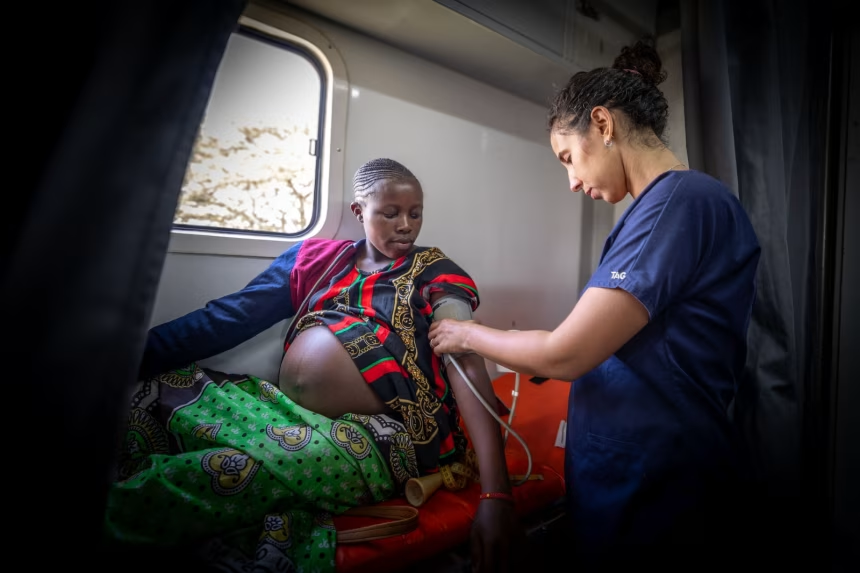
“Pre-eclampsia can develop in any pregnancy. Whether it becomes fatal depends on whether a woman’s blood pressure was checked in time, and whether quality emergency care was within reach when it turned severe,” said Dr Pascale Allotey, Director of WHO’s Department of Sexual, Reproductive, Maternal, Child, Adolescent Health and Ageing. “This roadmap brings together research, medicines, clinical guidance, health systems and political action so that a woman’s chances of surviving pregnancy and having a baby do not depend on where she lives.”
The roadmap also addresses the limited development of medicines specifically approved for preventing or treating pre-eclampsia and eclampsia. WHO has identified priority research areas to encourage greater investment in tools that can predict, detect and manage these conditions.
Also read: 10th Operation Smile UAE Cleft Surgical Programme Set for Abu Dhabi
Beyond pregnancy, hypertensive disorders can increase a mother’s future risk of hypertension, cardiovascular disease, stroke and kidney disease. Children affected during pregnancy may also face longer-term health risks. The initiative calls on governments, researchers, funders, healthcare professionals, industry and development partners to coordinate efforts so that proven interventions and future innovations reach women and babies worldwide.