

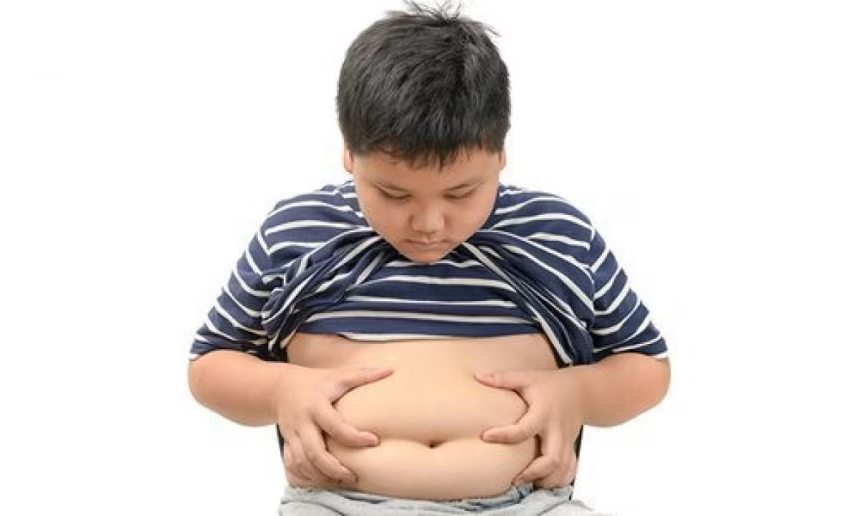

The World Health Organization (WHO) has advised against using obesity medicines, including GLP-1 weight-loss injections, in children under 10, recommending that treatment at this age should focus primarily on healthy eating, physical activity and lifestyle support.
The recommendation forms part of new global guidance on managing childhood obesity. WHO said there is currently insufficient evidence to support the routine use of obesity medicines, bariatric surgery or weight-management devices in children younger than 10.
The guidance comes as childhood obesity rates continue to rise globally. An estimated 170 million children and adolescents are living with obesity, including around 70 million children aged five to nine. Obesity prevalence among children in this age group has increased fourfold since 1990, from 2% to 8%.
Also read: Expanded Multi-Specialty Clinic Opens at UW Mall
Dr Luz De Rigil, Director of Nutrition and Food Safety at WHO, said: “For children under 10, WHO does not recommend obesity medicines, bariatric surgery or weight-management devices. This is a strong recommendation.”
Click here to join our WhatsApp channel here
The guidance notes that some digital tools, including activity trackers and games designed to encourage movement, may also have a role, although evidence remains limited. For older children and adolescents, obesity medicines or other interventions may be considered in specific circumstances when lifestyle approaches have not been effective and the child is considered physically and mentally prepared for treatment.
WHO’s head of Nutrition and Food Safety Actions, Laurence Grummer-Strawn, said: “We are particularly concerned in this age group, if you are starting children very early on to using a GLP-1 or drugs like this, when does that stop? We don’t really have evidence that you can use this as a temporary treatment and then turn to something dietary later on in life. We are very cautious about jumping in without clear evidence,” he said.