


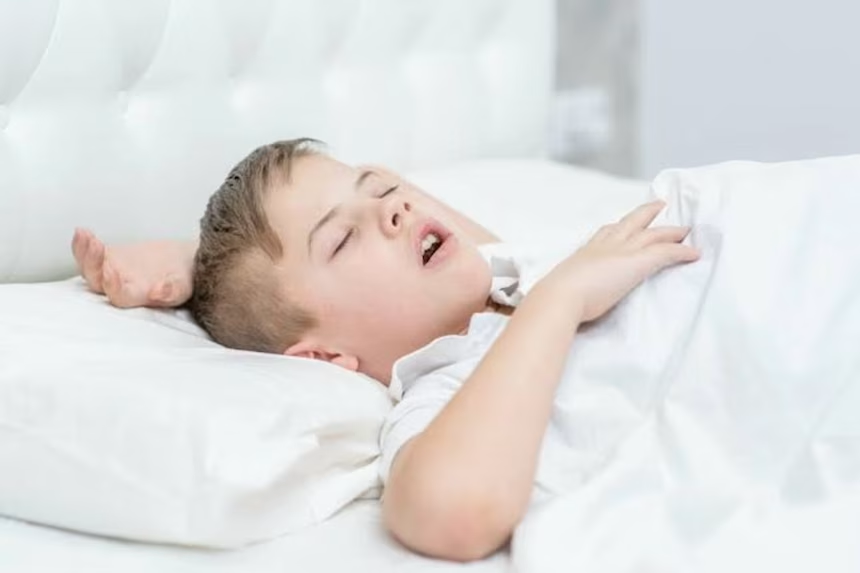

In this Q&A, a paediatric dental expert walks through the everyday signs parents tend to miss, from posture and screen habits to the age at which mouth breathing starts affecting facial growth. The conversation also covers how to spot a narrow palate or open bite early, when occasional mouth breathing during a cold becomes a lasting pattern, and a simple at-home check parents can do while their child sleep
What physical signs of mouth breathing might a parent notice at home but not connect to dental health?
Most parents tell me, “She just sleeps with her mouth open.” They see it, but they don’t link it to teeth. So I ask about the rest. Dry or chapped lips. A wet patch on the pillow. Strong morning breath. Waking up thirsty. A nose that never really clears. Dark circles under the eyes. Noisy chewing and lots of water with meals. Cavities and red gums can show up too, because a dry mouth loses the protection of saliva. One of the most common stories starts with a child who brushes well but keeps getting new cavities. The mouth breathing only comes up at the end, almost as an afterthought.
Beyond snoring, what should parents actually watch for?
Not every mouth breather snores. At night, I look for restless sleep, sweating, a neck stretched back, bedwetting, and a child who is hard to wake. In the daytime, I look for tiredness, crankiness, and poor focus. Teachers often say, “He can’t sit still and he can’t concentrate,” and parents start thinking about an ADHD assessment. I never say it is only sleep. But poor sleep can look a lot like ADHD, so I always ask how he sleeps. Then there is posture: head forward, rounded shoulders, open mouth, and a tongue that rests low.
Click here to join our WhatsApp channel here
At what age does mouth breathing start leaving a visible mark on jaw or facial development?
There is no single age. The face grows fastest in the early years, so a child who breathes through the mouth every day has more growth that can be affected. Siblings show this well. A 4-year-old and a 9-year-old with the same habit are in very different places. The little one needs guidance. The older one may already have a narrow upper jaw. The earlier we notice, the more growth we have to work with.
Is there a difference between occasional mouth breathing, say during a cold, and a persistent daily pattern?
Yes. During a cold, the nose is blocked, so the mouth takes over. That is normal, and it settles when the nose clears. What I hear a lot is, “The cold ended weeks ago, but his mouth is still open.” That is the moment to look closer. A pattern that needs attention happens every day, at rest, and at night, even without a cold. The habit can stay after the blockage is gone. Enlarged tonsils, adenoids, and allergies are common causes, and those need a medical check. My job is to spot the pattern and guide the next step.
How does screen time and posture contribute to this habit?
Watch a child with a tablet for five minutes. Head forward, shoulders rounded, mouth open, totally focused. Screens do not cause mouth breathing on their own. But long hours in that posture, with less active play, can turn it into a habit. Late screen time also delays bedtime and lightens sleep. My simple tips: screen at eye level, feet supported, and a gentle “lips together” reminder. Turning that reminder into a game with a small reward works well with little ones.
What does a narrow palate or open bite look like to you as a clinician, and how early can you spot it?
A narrow palate looks high and deep, more V-shaped than wide. Upper teeth are often crowded, and sometimes the upper back teeth bite inside the lower ones. An open bite means the front teeth do not meet when your child bites down. You can see a gap, and sometimes the tongue. A combination I see often is a child who stopped the pacifier years ago but still has an open bite, with the tongue pushing forward when swallowing. That tells me the pacifier was not the whole story. So I look at breathing, tongue position, swallowing, and habits together. Baby teeth tell me a lot. They should have small gaps. When a 4 or 5-year-old has none, I start asking questions.
Also read: Global Life Expectancy Recovers as Noncommunicable Diseases Rise
Should parents check their child’s breathing at night?
Yes, and it takes only a few minutes. Wait 30 to 60 minutes after your child falls asleep. Stand quietly and watch and listen. Look for an open mouth, loud snoring, pauses, gasps or snorts, a belly and chest working hard, a neck stretched back, and sweating. Loud snoring on three or more nights a week is worth mentioning to a professional. The most useful thing a parent can bring me is a one-minute phone video of their child sleeping. It shows me what one appointment cannot. If you see pauses in breathing, do not wait for the next dental visit. Speak to your pediatrician or an ENT. I screen and refer. A sleep physician makes the diagnosis, and a sleep study confirms it.
For parents, the takeaway is simple: an open mouth at night is not just a habit to outgrow, but a sign worth checking before it shapes a child’s smile and sleep for years to come.