

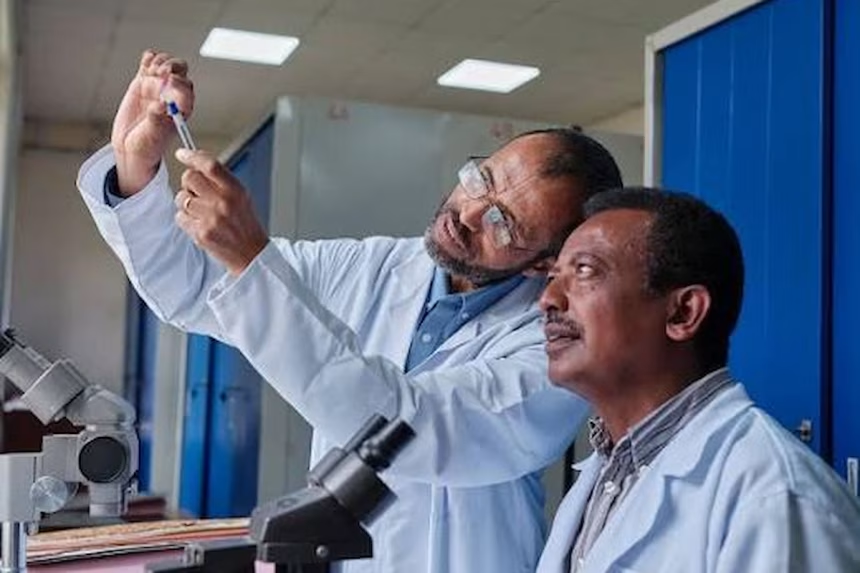

The World Health Organization (WHO) has called for greater investment in research into traditional, complementary and integrative medicine (TCIM), highlighting a significant evidence gap despite its widespread use globally. The organisation has launched its Global Research Priorities and Agenda for Traditional, Complementary and Integrative Medicine 2025–2034, a 10-year roadmap outlining research priorities that could support better health outcomes, address noncommunicable diseases and advance universal health coverage.
Billions of people worldwide use traditional and complementary medicine, yet less than 1 per cent of global health research funding is devoted to understanding where these approaches are safe, effective and appropriate. Researchers in the field account for just 0.43 per cent of the global health research workforce.
The agenda identifies priority research areas including stroke, mental health, pain, musculoskeletal disorders, cancer, metabolic diseases and reproductive health. It also highlights research involving priority populations such as older people and children.\
Also read: New Partnership Aims to Fast-Track Solutions to Global Water Challenges
WHO said stronger evidence can help governments make informed decisions on regulation, insurance coverage, service delivery and workforce development, while improving patient safety and identifying effective interventions.
The framework also emphasises the need to protect Indigenous knowledge, intellectual property and data sovereignty. It encourages the use of real-world evidence, digital health technologies, systems thinking and artificial intelligence in traditional medicine research.
The agenda was developed through a global research prioritisation exercise involving analysis of nearly 40,000 research grants, 116 research institutes across 67 countries and consultations with experts and researchers worldwide.