


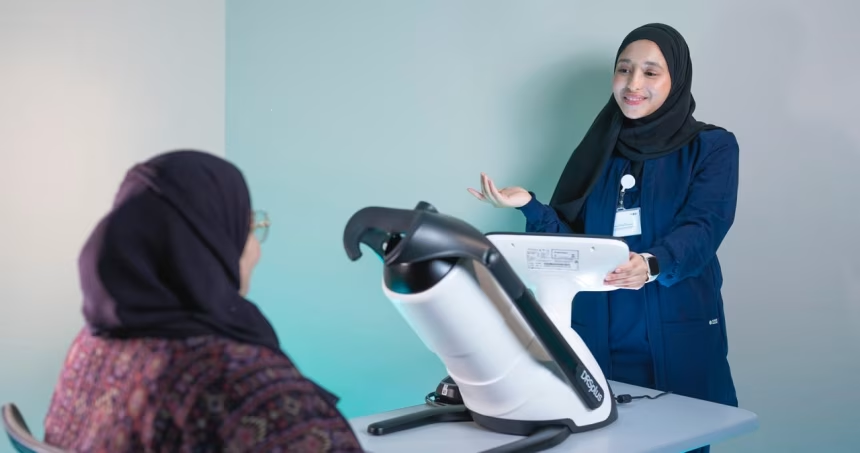

Abu Dhabi, UAE: Mohamed bin Zayed University of Artificial Intelligence (MBZUAI) has launched a long-term deep phenotyping study designed to examine the genetic, biological and lifestyle factors influencing health and disease among people living in the UAE.
The 25-year study aims to build a detailed health dataset that can support research into earlier disease detection, prevention and precision medicine. Researchers will collect information covering participants’ medical histories, lifestyles, advanced imaging, blood tests, continuous glucose and sleep monitoring, as well as multi-omics data including genomics, transcriptomics, metabolomics and metagenomics.
Also read: MR-Guided Focused Ultrasound Reaches 10,000 EMEA Patients
MBZUAI plans to use artificial intelligence to analyse these datasets and develop models that could improve understanding of how diseases develop and progress. The UAE’s diverse population, representing more than 200 nationalities, could provide valuable insights for research relevant to different demographic groups.
H.E. Dr Fatima Al Kaabi, Director General of the Emirates Drug Establishment and Affiliated Associate Professor of Personalized Medicine at MBZUAI, said: “The UAE has cemented its leadership in population genomics through the Emirati Genome Programme. This study marks an important step forward in building an integrated health knowledge base that brings together clinical, biological and lifestyle data collected over an extended period, while harnessing artificial intelligence to transform these datasets into scientific insights that deepen our understanding of how diseases emerge and progress.”

Participants will also receive personalised research insights through a secure study portal, which can be shared with their physicians.
The study has received approvals from the Department of Health – Abu Dhabi’s Health Research and Technology Committee, the MBZUAI Institutional Review Board and the IHLAD Research Ethics Committee. Participant samples will be stored securely in the UAE, with identifying information separated from research data.