


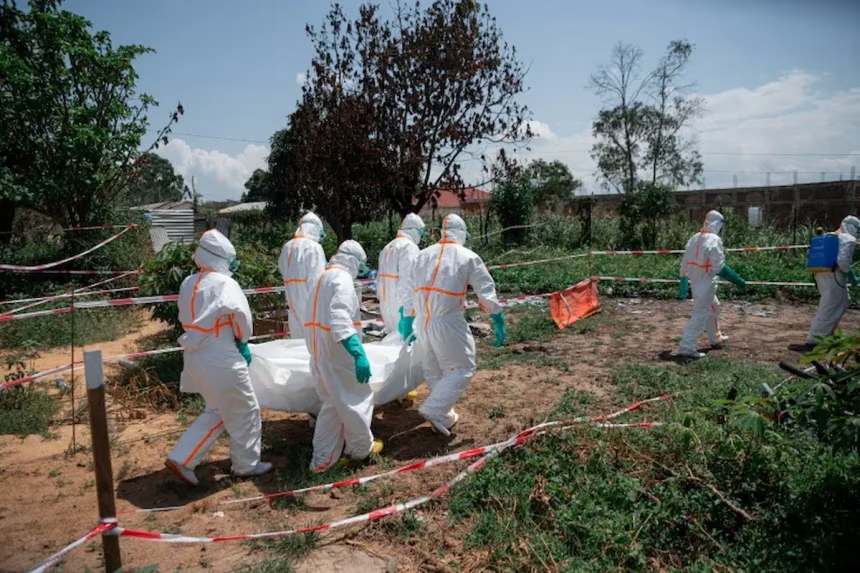

The Ebola outbreak in the Democratic Republic of the Congo (DRC) has become the deadliest in the country’s history, with 2,325 deaths recorded since the outbreak was declared on May 15.
The DRC’s National Public Health Institute has reported 4,945 confirmed cases, including 101 new cases in the previous 24 hours. The outbreak has surpassed the 2,299 deaths recorded during the country’s 2018–2020 Ebola outbreak.
The outbreak, the DRC’s 17th, is also the country’s largest in terms of confirmed cases. UN humanitarian chief Tom Fletcher has described it as the fastest-growing Ebola outbreak on record, warning that a faster and larger international response is needed to prevent the virus from spreading further.
Click here to join our WhatsApp channel here
“Normally, as an outbreak progresses, the case fatality ratio should fall as contact tracing improves and patients are identified and treated earlier,” said Thomas Parisch, a public health specialist deployed to the DRC with medical charity Doctors Without Borders, known by its French initials MSF. “Instead, we’re still seeing many cases detected very late, when treatment is less likely to succeed, with many identified only after they die in the community.”
Also read: Emergency Authorization Expands Treatment Options for New World Screwworm in Dogs
The current outbreak is caused by the Bundibugyo species of Ebola virus, for which there are currently no approved vaccines or treatments. A small number of experimental vaccines and therapies are being evaluated, while health authorities are assessing whether existing Ebola treatments could be effective.
The outbreak has been difficult to contain due to weak health infrastructure, remote communities and ongoing conflict near the DRC’s borders with South Sudan, Uganda and Rwanda.
The case fatality ratio has also risen sharply, from around 20% in early June to 46%, meaning nearly one in two confirmed infections is now resulting in death. Health experts say many patients are being diagnosed and treated too late, reducing their chances of survival.
The World Health Organization has warned that, at its current pace, the outbreak could surpass the scale of the 2014–2016 West African Ebola epidemic, which killed more than 11,000 people.